Overview

ARF’s annual AUDIENCExSCIENCE conference will showcase the most urgent challenges and recent breakthroughs in audience measurement. This year, we examine the rapidly changing intersection of AI, marketing, media, and consumer insights. As AI shifts research workflows, alters measurement systems, and changes consumer behavior, industry leaders will share new insights on how audience measurement is adapting to rapid change. We’ll explore how AI-driven search is transforming discovery and trust, the latest evidence in attention science, and modern frameworks for engaging diverse audiences with cultural sensitivity. Sessions will cover the most challenging video measurement questions across CTV, linear, and streaming; examine the evolving role of legacy media in a fragmented ecosystem; and improve influencer strategies through better alignment of content, audience, and outcomes. We’ll also showcase advanced, privacy-centric approaches to audience definition and targeting as AI transforms media, advertising workflows, and risk management. Bringing together the world’s leading researchers, practitioners, and innovators, AUDIENCExSCIENCE offers insights, tools, and evidence that will shape the future of marketing, media, and measurement. AUDIENCExSCIENCE 2026 will be held March 18-19 at People Inc., 225 Liberty St., NYC. 

Call for Content - Now Open

2026 Call for content topic descriptions:

AI in Marketing & Research: Emerging Applications, Evidence, and Implications
AI is transforming how researchers generate insights, simulate behavior, and evaluate marketing performance. From large language models and synthetic respondents to AI-enhanced segmentation and predictive analytics, new tools are reshaping methodologies at scale. How is AI being integrated into the research workflow? What have we learned about its validity and reliability? What are the implications for research design, interpretation, and decision-making in an increasingly automated landscape? What strategies and tools are you using to combat deepfakes and ensure the authenticity and transparency of AI-generated content? What is the latest research on systems to verify tamper-proof content provenance, such as watermarking and C2PA? As consumers encounter more fake photos and videos—whether of cute kids and pets or otherwise—how does this influence their perception of other photos and videos?

 Balancing Privacy with Personalization in the Age of Personal AI
As AI agents become personal assistants, advocates, and gatekeepers for millions, the challenge of balancing privacy with personalization grows more complex. When each person’s AI is trained to protect their data and provide highly relevant experiences, the tradeoffs between transparency, trust, and personalized engagement become more pronounced. We welcome research, case studies, and innovations that explore:

  • How AI agents can provide personalized value while respecting privacy boundaries
  • Frameworks for data consent, control, and ethical use in human–AI interactions
  • Emerging technical and policy strategies to maintain user control while facilitating large-scale personalization

AI Search and the Battle for Trust
Research on the future of search is crucial as AI shifts results from links to text answers. What does this mean for publisher revenue, consumers’ ability to distinguish sponsored from organic content, and broader trust in both advertising and AI? These changes could influence how consumers find brands, how effectiveness is measured, and how advertising strategies are developed—raising urgent questions for marketers and researchers alike. We invite you to submit work exploring these shifts, their measurement challenges, and their implications for the future of marketing and media.

Advancing the Science and Business of Attention
Attention metrics have rapidly advanced, yet industry discussions often revisit familiar topics. How are emerging technologies like AI-driven eye-tracking, AR/VR, and predictive biometrics changing our understanding of “attention”? Where is the strongest (or weakest) empirical evidence linking attention metrics to real-world outcomes such as increased revenue, customer retention, or brand loyalty? How have marketers and media buyers integrated attention-based metrics into daily planning, buying, and optimization—and what lessons, positive or negative, have been learned? Are there significant limitations or blind spots in current attention measurement methods, and what new frameworks or additional metrics could be developed?

Evolving Strategies for Reaching Diverse Audiences
Marketing to diverse audiences now requires more than just demographic segmentation—it involves cultural fluency, contextual awareness, and understanding how identity, values, and media behaviors intersect. What are the best practices for inclusive marketing in an era of rising sociopolitical polarization? How are brands managing differences not only in race, ethnicity, and gender but also in ideology, geography, and media ecosystems? What frameworks help balance authenticity, representation, and risk in this increasingly complex landscape?

The Current State of Video Measurement

Video measurement faces significant challenges, especially as we attempt to unify Connected TV (CTV), linear TV, and streaming platforms into a single ecosystem. The viability of “deterministic” identity matching systems is being undermined by changing privacy rules, which lead to a greater reliance on privacy-first “probabilistic” methods. What are the concerns about their accuracy and scalability, especially as video consumption becomes ever more fragmented? Partnerships between major data owners and independent measurement firms signal the possibility of a more comprehensive, cross-platform view of fragmented audiences, but do the numbers add up? What are the most promising paths forward for hybrid methodologies?

The Role of Legacy Media in Today’s Multi-Media World

Traditional media continues to complement digital and on-demand platforms rather than replacing them. OOH media still find their way into various parts of consumers’ lives, but is measurement keeping pace? As “drive time” radio evolves and podcasts grow in popularity, how is our understanding of radio’s role in advertising changing? The rise of in-app and in-game ads challenges measurement; how should their impact be evaluated? Linear TV remains a key component of brand strategies, but combining linear TV with digital platforms complicates audience measurement. How can cross-platform reach be most accurately captured? What new tools or strategies will help decode interactions between traditional and emerging media for better media planning?

Influencer Strategy: Aligning Content, Audience, and Goals
As influencer marketing continues to grow in scale and complexity, the main challenge is understanding its role in planning and maximizing audience reach. How can brands evaluate which influencers best match campaign objectives, target audiences, and media mix? How do different platforms, formats, and audience overlaps affect overall effectiveness? We invite you to submit work that advances the planning, assessment, and strategic integration of influencers into the marketing mix.

Brand Safety and Content Adjacency

For brand safety, what effective data-driven approaches go beyond traditional blocklists and manual monitoring? How can natural language processing (NLP), sentiment analysis, and machine learning models be used to classify content contextually and detect subtle nuances that may affect brand perception? Share methods for real-time brand safety monitoring across programmatic and social media channels, emphasizing the integration of proprietary data with third-party verification tools. What are the best practices for quantifying brand risk exposure and balancing scale with safety? How can these insights be operationalized to improve media buying strategies and build client trust in an evolving digital landscape? How are you addressing brand safety risks and measurement challenges from generative AI, deepfakes, synthetic content, and misinformation?


How to Submit

Waiting for copy from Sara.


Overview

ARF’s annual AUDIENCExSCIENCE conference will showcase the most urgent challenges and recent breakthroughs in audience measurement. This year, we examine the rapidly changing intersection of AI, marketing, media, and consumer insights. As AI shifts research workflows, alters measurement systems, and changes consumer behavior, industry leaders will share new insights on how audience measurement is adapting to rapid change.

We’ll explore how AI-driven search is transforming discovery and trust, the latest evidence in attention science, and modern frameworks for engaging diverse audiences with cultural sensitivity. Sessions will cover the most challenging video measurement questions across CTV, linear, and streaming; examine the evolving role of legacy media in a fragmented ecosystem; and improve influencer strategies through better alignment of content, audience, and outcomes. We’ll also showcase advanced, privacy-centric approaches to audience definition and targeting as AI transforms media, advertising workflows, and risk management.

Bringing together the world’s leading researchers, practitioners, and innovators, AUDIENCExSCIENCE offers insights, tools, and evidence that will shape the future of marketing, media, and measurement.


KEYNOTE SPEAKERS

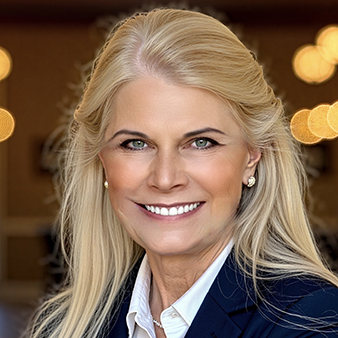
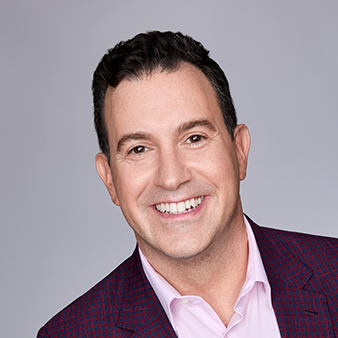
Bob Lord

President, Horizon Media Holdings;
Interim CEO, Horizon Global
View Bio

Laura Martin, CFA & CMT

Senior Internet & Media Analyst,
Needham & Company
View Bio

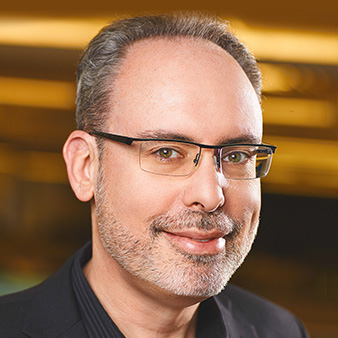
Shelly Palmer

Professor of Advanced Media, Newhouse School, Syracuse University;
CEO, The Palmer Group
View Bio

The Great AI Transformation of 2026
Shelly Palmer will deliver a fast-paced briefing on the Great AI Transformation of 2026 for media and marketing leaders. He will outline rapid shifts in AI capability, product cycles, and deployment patterns, and he will show how agentic systems will browse, compare, negotiate, and purchase. He will explain how answer engines reshape discovery and measurement and provide practical playbooks for content and data. The session will cover designing for agents as buyers, managing metadata and offers in collapsed funnels, and applying workable model practices and governance. You will leave with clear takeaways to use immediately.
Shelly Palmer — Professor of Advanced Media (Newhouse School, Syracuse University), CEO of The Palmer Group, and creator of Generative AI for Execs.

Featured Speakers

Tracy Adams, Ph.D.
Advertising Research Foundation

Lyndsey Albertson
NBCU

Pedro Almeida
Mediaprobe

David Bassett
Lumen Research

Brendan Brady
Antenna

Aarti Bhaskaran
Snap

Pip Bingemann
Springboard

Daniel Bulgrin
MediaScience

Nicole Cooper
Roku

Amy Crawford
Songtradr/MassiveMusic

Sean Cunningham
VAB

Peter Daboll
DAIVID

Tina Daniels
Aquila, Association of National Advertisers

Megan Danielson
Google

Larry DeGaris
Medill Spiegel Research Center
Northwestern University

Megan de Leon
Ipsos North America

Pete Doe
Nielsen

Michele Donati
Horizon

Paul Donato
Advertising Research Foundation

Gilles Duterque
Antenna

William E. Engel
Tenetic

Joe Garland
Comscore

Sergey Fogelson, Ph.D.
TelevisaUnivision

Joetta Gobell, Ph.D.
People Inc.

Tracy Gutin
Kantar

Alexis Harris
Tik Tok

Annie Hagerty
Comcast Advertising

Bill Harvey
Bill Harvey Consulting

Ryan Huff
Snapchat

Ed Hunt
Medill Spiegel Research Center
Northwestern University

Prasad Joglekar
Deben Media Corp.

David Kietz
Kantar

Katie Killeen
Kantar

Jason R. Klein
SeeMe Index

Zach Kubin
Adelaide

David Kurzynski
Nielsen

Caitlin Leffers
Comscore

Yan Liu
TVision

Bob Lord
Horizon Global

Giulia Manca, Ph.D.
eye square

Stephen Mangan
Google

Scott McDonald, Ph.D.
Advertising Research Foundation

Laura Martin, CFA & CMT
Needham & Company

Tyler Montague
Swayable

Brian Morse
Locality

Jennifer Ng
The Trade Desk

Twinkal Patel
Comcast Technology Solutions

Shelly Palmer
The Palmer Group

Jennifer Pelino
Genius Sports

Maddie Perkins
Influential

Natasha Potashnik
Vevo

Efthymios Psaraftis
Kenvue

Amy Reisenbach
CBS Entertainment

Michael Platt, Ph.D.
Wharton Neuroscience Initiative
University of Pennsylvania

Steffen Schmidt, Ph.D.
Concept m AI

Stefan Schönherr
eye square

Adam Shlachter
WPP Media

Abhijit Shome
Major League Soccer

Kristin Shumaker, Ph.D.
Comcast Advertising

Kristin Smith-Clinton
Uniworld Group

Pouya Tehrani, Ph.D.
TelevisaUnivision

Gareth Tuck
eye square

Duane Varan, Ph.D.
MediaScience

Deepak Varma
Kantar NA

Benjamin Vandegrift
VAB

Marc Vermut
TransUnion

Michael Vinson, Ph.D.
Comscore

Jaclyn Williams
TikTok

Jon Watts
CIMM

Ewa Zawol
dentsu

Dirk Ziems
Concept m AI

Julian Zilberbrand
LG Ads Solutions

Matt Voda

Optimine

Leslie Wood, Ph.D.

no photo available

Monica Wood

Herbalife

Who Should Attend?

C-Suite executives, senior and mid-career leaders and young professionals hailing from marketer, media, agency, research companies as well as academia will benefit from the breadth and depth of research shared. Industries include automotive, beauty, CPG, finance, food and beverage, hospitality, pharma, retail, and technology.

This event is designed for professionals working in:

• Ad Measurement
• Ad Sales Research
• Analytics & Insights
• Audience Impact
• Data Science
• Marketing Effectiveness
• Media Analytics & Research

Ad Measurement
Ad Sales Research
Analytics and Insights
Audience Impact
Consumer Insights
Data Insights
Data Science
Digital Research
Marketing Analytics
Marketing Effectiveness
Marketing Science
Measurement
Media Analytics
Media Research
Research
Strategy

Board of Curators

AUDIENCExSCIENCE’s Board of Curators lends their insight and expertise to determine which submissions, entered during an industry-wide call for content, will be presented at the conference.   This committee includes all of the ARF’s member constituents — Research, Marketers, Media, Agency, and Association/Academics. 


Tracy Adams, Ph.D.
Advertising Research Foundation

Pedro Almeida
Mediaprobe

Vassilis Bakopoulos
MMA

Meghan Bartley
GLAAD

Aarti Bhaskaran
Snap

John Bremer
Tenetic

Colin Campbell
Journal of Advertising Research

Paul Donato
Advertising Research Foundation

Mike Follett
Lumen Research

Jennifer Friedlander
ScreenVision

Deepak Garg
Advertising Research Foundation

Rouzbeh Gerami
Nielsen

Joetta Gobell
People, Inc.

Vijoy Gopalakrishnan
Circana

Abhi Gupta
Google

Julian Highley
Marketcast

Kelly Johnson
Disney ABC/ESPN

Helen Katz
Publicis Media

Divya Kaur
Kinesso

Tapan Khopkar
OMD

Jonathan Lopes
Digitas NA

Jon Lorenzini
Liftlab

Jay Mattlin
Advertising Research Foundation

Scott McDonald, Ph.D.
Advertising Research Foundation

Satya Menon
Kantar

Steven Millman
iSpot.tv

Jerry Nevins
VML

Mi hui Pak
Advertising Research Foundation

Kara Pellegrino
PepsiCo

Bharad Ramesh
Aqxle AI

Jukka Ranta
Comscore

Amy Rask, Ph.D.
MediaScience

M. Kim Saxton
University at Buffalo

Eric Sherman
formerly GSTV

Keith Smith, Ph.D.
Marketing Science Institute (MSI)

Horst Stipp, Ph.D.
Advertising Research Foundation

Rachel Sweet
St. Jude

Earl Taylor
Marketing Science Institute (MSI)

David Tice
Hub Entertainment Research

Michael Vinson
Comscore

Tristan Webster
TVision

Monica Wood
Herbalife

Samantha Zhang
Advertising Research Foundation

Jon Watts
Coalition for Innovative Media Measurement

Jon Watts
Coalition for Innovative Media Measurement

Aaron Slotnick
TransUnion

Jaclyn Williams
TikTok

Leslie Wood, Ph.D.

Matt Voda

Optimine

no photo available

Monica Wood

Herbalife

Pricing

Untitled Document
Standard
3/18/26
1-Day Rate
2/13/26
1-Day Rate
3/18/26
IN-PERSON
MEMBER

$1,299

$749

$849

NON-MEMBER

$1,499

$949

$1,049

Untitled Document
Standard
3/18/26
VIRTUAL
MEMBER

$799

NON-MEMBER

$999

Download the pdf for a list of hotels near People Inc.

Platinum Sponsors

paramount

Host

nielsen-logo
paramount

Gold Sponsors

vizio-160x80

Host

Related Content

AUDIENCExSCIENCE 2025: Past Event Highlights

ARF Attention Measurement Validation Initiative: Phase 2 Report (2nd Edition)

Cross-Platform Measurement Options from an Agency Perspective

How to Calculate Reach and Frequency Using Virtual IDs (VIDs)

To further, through research, the scientific
practice of advertising and marketing

© the Advertising Research Foundation. All rights reserved. – Privacy Policy